

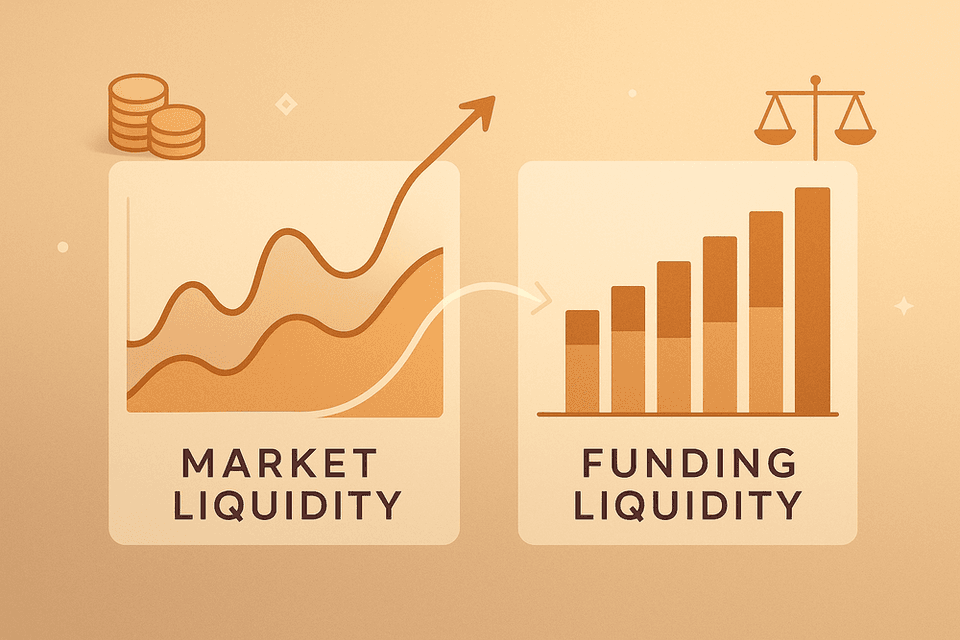
Market liquidity and funding liquidity are two key concepts in debt trading, and they serve different purposes:
- Market Liquidity: Measures how quickly and efficiently an asset can be bought or sold without significantly affecting its price. Indicators include bid-ask spreads, trading volume, and price stability.
- Funding Liquidity: Refers to a trader's ability to access cash or financing to meet obligations like margin calls or new trades. It depends on credit lines, collateral, and cash flow management.
Why It Matters
Balancing these two forms of liquidity is essential for traders to manage risks, execute trades efficiently, and maintain financial stability during market stress. If market liquidity drops, it can create a ripple effect, making funding liquidity more challenging.
Quick Comparison
| Aspect | Market Liquidity | Funding Liquidity |
|---|---|---|
| Definition | Ease of buying/selling assets without price impact | Ability to secure financing and meet obligations |
| Key Indicators | Bid-ask spreads, trading volume, price impact | Credit lines, collateral, cash reserves |
| Impact on Trading | Affects trade speed and price stability | Ensures resources for leveraging opportunities |
Key Takeaways
- Market liquidity ensures smooth trade execution.
- Funding liquidity ensures you have the capital to act.
- Both are interconnected - issues in one can affect the other.
Understanding these concepts and managing them effectively can help traders navigate market challenges and seize opportunities.
Market vs Funding Liquidity: Basic Concepts
Market Liquidity Explained
Market liquidity refers to how easily debt instruments can be traded close to their quoted prices. It’s assessed through three key factors:
- Tightness: A narrow bid-ask spread indicates better liquidity, especially for high-quality bonds.
- Depth: The amount of order volume available in the market.
- Resiliency: How quickly prices recover after a trade.
Indicators like bid-ask spreads, trading volume, and price impact help measure market liquidity. For example, narrower spreads and higher trading volumes typically reflect stronger liquidity, while minimal price changes from large trades suggest a market that can handle significant activity.
Funding Liquidity Explained
Funding liquidity, on the other hand, focuses on a trader's ability to access funds and meet financial obligations. Key aspects include:
- Credit Lines: The availability of credit lines for borrowing.
- Collateral Management: Using assets effectively as collateral to secure loans.
- Cash Flow Planning: Ensuring sufficient cash reserves to cover obligations.
A higher credit rating often leads to more affordable funding options, making it easier to maintain operational flexibility.
Both market and funding liquidity are crucial for managing debt portfolios. Market liquidity determines how easily positions can be adjusted, while funding liquidity ensures obligations are met. Together, they form the foundation of effective debt trading strategies.
Market and Funding Liquidity An overview
Main Differences: Market vs Funding Liquidity
Market liquidity and funding liquidity play distinct roles in how trades are executed and how capital is accessed in debt markets.
Key Differences Table
| Aspect | Market Liquidity | Funding Liquidity |
|---|---|---|
| Definition | How easily an asset can be bought or sold without major price changes | A firm's ability to meet payment obligations as they come due |
| Trading Impact | Influences the speed and price stability of trade execution | Determines the availability of funds for financing trades |
These factors are crucial in shaping trading strategies.
Impact on Trading Decisions
Market liquidity affects how quickly and at what price trades can occur. On the other hand, funding liquidity ensures a trader has the necessary resources to act on opportunities. Without adequate funding, even the most favorable market conditions can't be leveraged. Balancing these two elements is essential for effective trade execution.
How Market and Funding Liquidity Connect
Understanding how market and funding liquidity interact is crucial. These two elements are deeply connected, creating a feedback loop that affects risk management. When market liquidity drops, selling assets becomes less profitable, which can lead to funding difficulties. This relationship forces traders to tighten their risk controls whenever either type of liquidity weakens.
Liquidity Chain Reactions
When market liquidity decreases, assets sell for less favorable prices, making it harder for traders to meet margin calls. This creates a ripple effect, impacting overall liquidity. Addressing these challenges requires a well-rounded approach to managing liquidity risks.
Risk Prevention Methods
- Diversify Funding Sources Reduce reliance on a single funding source by building relationships with prime brokers, securing backup credit lines, and expanding your investor base.
- Regular Stress Testing Run stress tests to simulate various market and funding conditions. This helps you understand how combined pressures on liquidity channels might play out.
- Early Warning Systems Use monitoring tools to track key indicators like trading volume, bid-ask spreads, funding costs, and counterparty credit quality.
These strategies emphasize staying ahead of potential liquidity challenges.
"Professional, fair, and goes the extra mile to close note purchases--especially important when dealing with unrealistic/difficult sellers", says Larry Nein, Owner of Preferred Note Investors.
Practical Liquidity Management Steps
Effectively managing market and funding liquidity requires structured processes that are carefully monitored and controlled. Below, we outline steps to address challenges in both areas.
Market Liquidity Risk Controls
Managing market liquidity starts with keeping a close eye on key indicators like bid-ask spreads, trading volumes, and price volatility. These metrics help spot potential liquidity issues before they become major problems.
Key actions include:
- Tracking trading volumes across various debt categories
- Monitoring bid-ask spreads for similar portfolios
- Reviewing historical price trends
- Expanding trading relationships to minimize reliance on a single counterparty
How you present your portfolio is equally important. Clear documentation and well-structured performance metrics make it easier for investors to assess opportunities and act quickly.
Funding Liquidity Risk Controls
When it comes to funding liquidity, the focus is on preserving capital and ensuring access to diverse funding sources. Here are some essential strategies:
- Capital Buffer Management: Keep reserves above regulatory minimums to handle unexpected market shifts.
- Stress Testing: Simulate margin call scenarios under different market conditions to prepare for the unexpected.
- Credit Line Diversification: Build relationships with multiple funding providers to secure reliable capital access.
These steps help sellers stay ready to meet sudden capital needs, especially during periods of market instability. Aligning funding strategies with market liquidity measures strengthens overall resilience.
Combined Liquidity Management
Bringing together market and funding liquidity requires advanced tools. Modern analytics platforms allow real-time monitoring of both aspects, providing actionable insights into portfolio performance and funding needs.
To streamline this process, consider the following:
- Frequent portfolio valuation updates
- Automated systems for risk monitoring
- Secure management of transaction documents
- Standardized processes for smoother operations
Using standardized contract templates can also simplify transactions, ensure timely payments, and maintain compliance with regulations. This reduces operational hurdles and improves overall efficiency.
Balancing exposure to market risks while maintaining funding stability is at the core of effective liquidity management. Debexpert plays a key role in this by simplifying trade execution and post-trade processes.
"Professional, fair, and goes the extra mile to close note purchases--especially important when dealing with unrealistic/difficult sellers", says Larry Nein, Owner of Preferred Note Investors.
Conclusion
Effectively managing market and funding liquidity hinges on using the right technology and proven practices. These two forms of liquidity are deeply connected, requiring constant oversight and careful planning.
Success in portfolio management relies on clear documentation and presentation, which improve both transparency and trust. These practices also lay the groundwork for advanced tools to help address liquidity risks.
Modern analytics platforms offer real-time monitoring and early warning systems for market and funding liquidity risks. With tools like Debexpert, traders can simplify their processes while maintaining strong risk management.
To achieve a balanced approach, focus on:
- Improving portfolio presentations to better engage investors
- Using standardized contract templates for faster deal closures and smoother payment workflows
- Maintaining proactive communication to react quickly to new opportunities
FAQs
What is the relationship between market liquidity and funding liquidity during financial stress?
Market liquidity and funding liquidity are closely interconnected, especially during periods of financial stress. Market liquidity refers to how easily assets can be bought or sold without significantly impacting their price, while funding liquidity relates to the ability of traders or institutions to secure cash or credit to meet their obligations.
During financial stress, a decline in market liquidity can make it harder to sell assets without steep discounts, which in turn can strain funding liquidity as institutions struggle to raise cash. Similarly, a funding liquidity crunch can force asset sales, further reducing market liquidity. This feedback loop can amplify financial instability, making effective liquidity management critical for debt trading professionals.
What are the best strategies to manage funding liquidity risk in debt trading?
Managing funding liquidity risk in debt trading is crucial for maintaining smooth operations and avoiding financial strain. Here are a few effective strategies:
- Diversify funding sources: Relying on multiple funding channels, such as bank loans, bonds, or equity, can reduce dependence on a single source and improve liquidity resilience.
- Maintain a liquidity buffer: Holding a reserve of highly liquid assets, like cash or Treasury securities, ensures you can meet short-term obligations without disruptions.
- Monitor cash flows actively: Regularly reviewing cash inflows and outflows helps anticipate potential liquidity gaps and address them proactively.
By implementing these strategies, debt traders can better navigate funding challenges and maintain financial stability in dynamic market conditions.
How can traders leverage analytics platforms to better manage market and funding liquidity in debt trading?
Traders can utilize analytics platforms to gain deeper insights into both market and funding liquidity, enabling more informed decision-making in debt trading. These platforms provide tools to analyze portfolio performance, assess risk exposure, and monitor liquidity trends in real time.
By using features like portfolio analytics, traders can identify opportunities to optimize liquidity while minimizing risks. Additionally, platforms that offer real-time communication and secure data sharing streamline transactions, ensuring smoother operations and better liquidity management. For example, platforms like Debexpert can help professionals efficiently trade debt portfolios, making it easier to balance liquidity needs in a dynamic market environment.
