

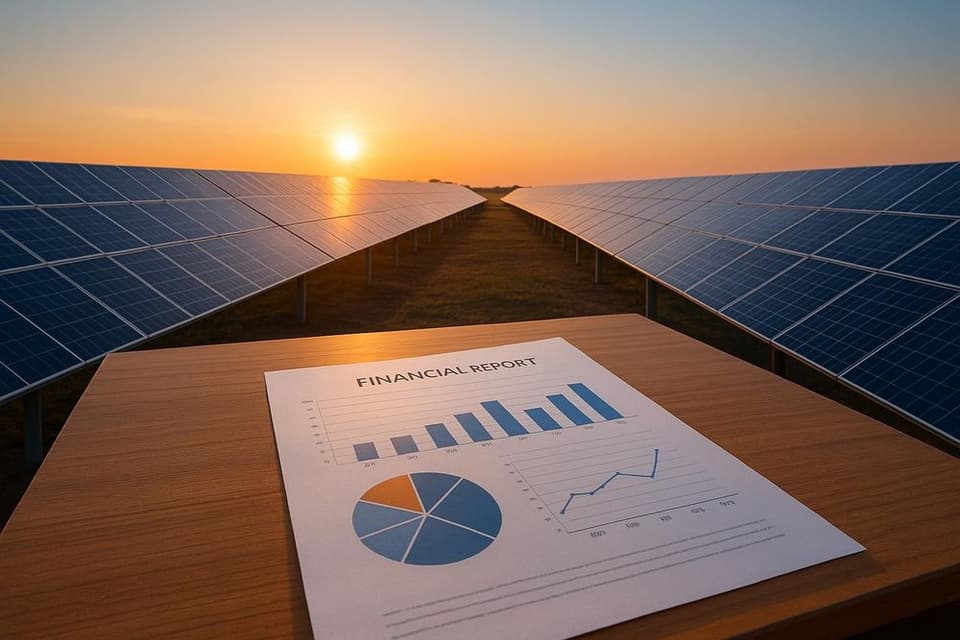
Solar energy financing offers four main options, each with unique benefits and risks. Here's a quick overview:
- Secured Loans: Use your home or solar system as collateral for lower interest rates (3–8%) and tax benefits. Risk: Losing collateral if you default.
- Unsecured Loans: No collateral needed, faster approval, but higher interest rates (5.5–20%) and no tax deductions.
- PACE Financing: Repay through property taxes with no upfront costs. Risk: A property tax lien is created.
- PPAs (Power Purchase Agreements): No upfront costs; pay for electricity at fixed rates. Risk: Limited ownership benefits and long-term contracts.
Quick Comparison
| Financing Type | Interest Rates | Repayment Terms | Collateral | Tax Benefits | Key Risk |
|---|---|---|---|---|---|
| Secured Loans | 3–8% | 10–15 years | Yes | Yes | Losing collateral |
| Unsecured Loans | 5.5–20% | 5–20 years | No | Yes | Higher interest rates |
| PACE Financing | Market-based | 5–30 years | Yes | Yes | Property tax lien |
| PPAs | Built-in | 10–25 years | No | No | Limited ownership |
Choosing the right option depends on your financial goals, risk tolerance, and preference for ownership or flexibility. Dive into the article for a detailed breakdown of each option.
Your Guide To Solar Panel Financing
1. Secured Solar Loans
Secured solar loans offer a financing option with interest rates between 3% and 8%, provided borrowers use an asset - usually their home or solar installation - as collateral. Here's a closer look at the process and considerations for managing these loans.
Lenders assess a borrower's home equity (the difference between the appraised value and any outstanding mortgage), credit score, and debt-to-income ratio. While approval can take several weeks, the lower interest rates and potential tax perks often make the wait worthwhile.
One key advantage? Borrowers can deduct interest payments on their taxes.
| Aspect | Details | Financial Impact |
|---|---|---|
| Typical Fees | Includes property appraisal, application, closing, and origination fees | Around $1,000 |
| Interest Rates | 3–8%, influenced by credit score | Cheaper than unsecured loans |
| Collateral Requirements | Home equity or solar equipment | Reduces lender risk, improves terms |
| Tax Benefits | Interest payments are often deductible | Can lead to yearly tax savings |
Portfolio Management Considerations
Secured solar loans come with predictable terms that help balance risk and return. Here are the main factors to consider:
- Risk Assessment The biggest risk is losing the collateral if the borrower defaults. Lenders need to document asset ownership carefully and monitor loan performance regularly.
- Payment Flexibility These loans usually offer flexible repayment options without penalties for early payments, allowing borrowers to pay off the loan faster if their finances permit.
- Impact of Property Sales Borrowers are typically required to repay the loan in full if they sell the property tied to the collateral.
Recent changes have made these loans more accessible, with relaxed eligibility requirements opening the door for more homeowners. However, the trade-off remains the same: borrowers enjoy lower rates and tax benefits but must pledge valuable assets as collateral.
2. Unsecured Solar Loans
Unsecured solar loans don't require collateral, focusing instead on the borrower's credit profile. They allow homeowners to install solar panels quickly without tying the loan to their property. Interest rates for these loans typically range from 2.99% to 5.99% APR.
Qualification Requirements
To qualify for an unsecured solar loan, borrowers need to meet certain benchmarks:
| Requirement | Threshold | Impact on Approval |
|---|---|---|
| Minimum FICO Score | 650 | Basic qualification |
| Preferred FICO Range | 680-719 | Access to better rates |
| Premium FICO Score | 720+ | Best available rates |
| Debt-to-Income Ratio | Below 50% | Required for approval |
| Home Ownership | Name on title | Mandatory |
These requirements help lenders gauge the borrower's ability to repay, balancing risks with costs.
Risk and Cost Structure
Unsecured solar loans come with distinct advantages and challenges:
- Quicker Processing: Applications are approved faster compared to secured loans, speeding up solar installations.
- Higher Costs: Interest rates are generally higher, and payments are not tax-deductible.
- Credit Impact of Default: Failing to repay can harm credit scores and lead to collection efforts.
Portfolio Management Strategy
When managing unsecured solar loans, keep these factors in mind:
- Risk Evaluation Assess the borrower's credit profile, focusing on FICO scores and debt-to-income ratios, since no collateral is involved.
- Loan Terms These loans typically last 5 to 15 years. Shorter terms may lower interest rates but increase monthly payments.
- Fee Awareness Be mindful of origination fees and dealer markups, which can account for 40-50% of the loan amount.
Cost Optimization Tips
To reduce expenses and get the best deal:
- Consider adding a co-borrower with strong credit to secure lower rates.
- Compare lenders carefully, paying attention to origination fees and dealer markups.
- Aim for a balance between affordable monthly payments and minimizing total interest costs.
Unsecured solar loans are a fast, flexible option for going solar, but they require a strong credit profile and come with higher costs. They're ideal for borrowers prioritizing speed and convenience over long-term savings.
3. PACE Financing Programs
Property Assessed Clean Energy (PACE) financing allows property owners to fund solar installations through property tax assessments. This approach offers 100% project financing with extended repayment terms.
Assessment Structure
PACE financing ties the loan to the property, not the individual owner. Repayments are made via property tax bills, with terms typically ranging from 5 to 30 years.
| Feature | Description | Advantage |
|---|---|---|
| Lien Basis | Linked to property, not owner | Transfers with property sale |
| Coverage | Full project financing | No upfront costs |
| Term Length | 5–30 years | Flexible payments |
| Interest Rate | Market-based + 2–5% fee | Competitive rates |
These elements shape the financial structure and risk profile of PACE-financed projects.
Economic Impact
PACE financing drives economic growth and job creation:
- For every $1 million invested, $2.5 million in economic activity is generated.
- Each $1 million investment creates 12 jobs.
- Available in 37 states and Washington D.C., covering over 80% of the U.S. population.
Commercial Applications
C-PACE (Commercial PACE) has gained traction among commercial property owners:
"C-PACE provides a unique financing structure for commercial property owners to fund clean energy projects, allowing for repayment through a voluntary property tax assessment rather than traditional loan structures." – SunPeak Power
So far, over 3,500 projects have been financed through C-PACE, totaling $9.7 billion in green investments.
Property Value Impact
PACE financing can enhance property values by reducing operating costs:
- Annual electricity costs of $2.10 per square foot.
- Savings of $105,000 per year for a 50,000-square-foot building.
- A potential property value increase of $1 million at a 5% capitalization rate.
Regulatory Framework
Starting December 17, 2024, new consumer protection regulations will take effect. Key updates include:
- Revised TILA-RESPA Integrated Disclosure requirements.
- Enhanced ability-to-repay evaluations.
- Standardized disclosure forms.
These changes aim to improve transparency and reduce risks for all parties involved.
Portfolio Management Considerations
Managing PACE-financed projects requires attention to their unique financial and regulatory factors. Key areas to focus on include:
- Tax Assessment Integration The property’s tax capacity determines financing amounts, providing a consistent repayment structure.
- Transfer Mechanics Since the financing is tied to the property, ownership transfers are simplified, reducing administrative burdens.
- Risk Evaluation Factors like property tax capacity and projected energy savings are critical risk metrics, complementing traditional credit assessments.
4. Solar Power Purchase Agreements
After discussing loan-based and PACE financing, let's look at Solar Power Purchase Agreements (PPAs) as another way to finance solar systems.
With a PPA, developers handle the installation and upkeep of solar systems while selling the generated electricity to customers at pre-set rates over 10–25 years.
Payment Models
Solar PPAs typically follow two main payment structures:
| Payment Model | Description | Benefits |
|---|---|---|
| Fixed Price | A constant rate throughout the contract term | Provides predictable costs and shields from utility rate hikes |
| Fixed Escalator | Annual rate increases of 2–5% | Starts with lower payments, aligning with historical trends |
These payment models offer cost stability and savings. For context, electricity rates have risen by an average of 2.67% annually over the last 25 years, making PPAs a useful way to manage rising energy expenses.
Financial Performance
PPAs can reduce electricity costs by 10–30% each month. Residential systems typically cost $100–$130 monthly under a PPA, with no upfront investment or maintenance fees required.
Risk Considerations
Several risks can influence the success of a PPA:
1. Volume Risk Weather and system performance can affect energy production. Using advanced monitoring systems helps predict and manage these fluctuations.
2. Market Risk Energy price changes can impact returns. Since 2019, PPA prices have climbed due to higher interest rates and increased demand.
3. Credit Risk The developer's stability and the buyer's financial health are critical. To mitigate risks, tools like letters of credit, performance bonds, and guarantees from parent companies are often used.
Portfolio Integration Strategies
To maximize the effectiveness of PPAs, consider these approaches:
- Geographic Diversification: Focus on projects in regions where electricity use aligns with production.
- Technology Mix: Combine solar with wind projects to balance energy generation.
- Contract Flexibility: Negotiate terms that include protections against potential losses.
- Settlement Location: Prioritize projects located in the same market as energy consumption.
Performance Monitoring
Modern tools now allow for real-time tracking of system performance, energy production forecasts, financial settlements, and compliance checks. These platforms help identify and address issues early, ensuring PPAs continue to perform well as part of a broader solar investment strategy. By integrating these tools, PPAs can remain a reliable and efficient financing option.
Direct Comparison of Solar Financing Options
Understanding the differences between solar financing options can help you make informed decisions.
Cost Structure Analysis
Here's a simple breakdown of costs:
- Cash Purchases: $3.00 per watt
- Solar Loans: $4.30 per watt
- PPAs/Leases: No upfront cost
For a typical 11 kW solar system in 2024, the total cost is $22,022, excluding installation fees. These costs directly tie into various interest rates and collateral requirements.
Interest Rates and Terms
Each financing type has unique terms, rates, and benefits. Here's a quick comparison:
| Financing Type | Interest Rates | Typical Terms | Collateral | Tax Benefits |
|---|---|---|---|---|
| Secured Solar Loans | 3–8% | 10–15 years | Yes (Home equity) | Full 30% ITC |
| Unsecured Solar Loans | 5.5–20%+ | 5–20 years | No | Full 30% ITC |
| PACE Financing | Market variable | Property tax assessment | Yes (Property) | Full 30% ITC |
| Solar Lease/PPA | Built into payments | 20–25 years | No | None |
Long-term Financial Impact
The choice of financing affects long-term savings. Here's an estimate of net savings over 25 years:
- Cash Purchase: $30,000
- Solar Loans: $24,000
- Leases/PPAs: $9,000
These figures highlight how ownership models generally lead to higher savings compared to leasing options.
Property Value Considerations
Solar installations can boost property value. Zillow reports that homes with solar panels sell for about 4% more than similar homes without them. However, the type of financing matters:
- Owned Systems (Cash/Loan):
- Immediate property value increase
- Easier transfer during home sales
- Full control over maintenance
- Leased/PPA Systems:
- More complicated transfer process
- New owners may need to assume the lease
- Limited control over maintenance
Risk Assessment
“an investment that will grow in value or generate long-term income” - How Stuff Works
Each financing option carries its own risks:
| Risk Factor | Secured Loans | Unsecured Loans | PACE | Lease/PPA |
|---|---|---|---|---|
| Collateral Foreclosure Risk | High | None | High | None |
| Performance Risk | Owner-managed | Owner-managed | Owner-managed | Provider-managed |
| Maintenance Cost | Owner-managed | Owner-managed | Owner-managed | Included |
Market Trends and Adoption
Ownership models, particularly solar loans, are gaining popularity over leases and PPAs. Why?
- They offer better long-term savings.
- Federal tax incentives (30% ITC through 2032) remain accessible.
- Homes with owned systems see higher value appreciation.
- Owners have more control over system maintenance and upgrades.
With payback periods averaging 9 to 12 years, systems costing under $20,000 could save you over $50,000 in 25 years.
Recommendations for Portfolio Management
Managing a portfolio of solar debt obligations effectively means finding the right balance between risk and return. One crucial metric to focus on is maintaining a Debt Service Coverage Ratio (DSCR) of at least 1.30x. This ensures there’s enough buffer to comfortably meet debt obligations. Combining this with careful structuring and diversification can improve overall portfolio outcomes.
Strategic Debt Structuring
A solid debt structure is the backbone of a stable portfolio. Start by using a cash flow-based debt sizing strategy, which involves modeling expected cash flows and setting conservative DSCR targets for different project stages. To limit risk, use Special Purpose Vehicles (SPVs) to isolate individual project liabilities. A good approach is to begin with full equity financing during the early stages of a project. Once cash flows stabilize, gradually introduce debt to reduce initial risks, improve flexibility, and boost returns.
Portfolio Diversification Framework
Once debt is structured properly, focus on spreading out risks. Diversify your portfolio by considering factors like project stages, types of financing, geographic locations, and technology used. Also, align debt payments with projected cash flows to avoid mismatches. Aim to maintain an all-in interest rate of approximately 2.00% per year for better cost management.
Risk Mitigation Tools
Here are some practical tools to manage risks effectively:
- Build financial models to predict project cash flows.
- Align debt repayment schedules with available cash flow.
- Automate debt sculpting processes using VBA.
- Consider back-leverage structures to shift debt from the project level to a holding entity, which can optimize tax equity.
FAQs
What are the main differences between secured and unsecured solar loans, and how do they impact risks and benefits?
Secured solar loans are backed by collateral, such as your home or solar panels. This type of loan typically offers lower interest rates, but it comes with the risk of losing the collateral if you default on payments. These loans are a great option if you’re looking for lower costs over time and are confident in your ability to meet repayment terms.
Unsecured solar loans, on the other hand, don’t require collateral, making them faster to approve and eliminating the risk of losing assets. However, they often have higher interest rates and may include additional fees. This option is ideal for those who value convenience and flexibility but are comfortable with potentially higher overall costs.
How does PACE financing affect property value and taxes when selling a home?
When selling a home with PACE (Property Assessed Clean Energy) financing, the remaining balance of the loan typically needs to be paid off at closing. Most buyers' lenders require the PACE loan to be fully settled before approving a new mortgage for the property.
In some cases, the buyer may agree to assume the PACE loan. However, they must qualify for the loan assumption and accept the repayment terms. It's important to discuss these details with all parties involved to avoid delays in the sale process.
What are the risks and benefits of choosing a Solar Power Purchase Agreement (PPA) over other solar financing options?
A Solar Power Purchase Agreement (PPA) allows you to install solar panels with no upfront costs, making it an attractive option for immediate savings on electricity bills. With a PPA, you pay a fixed rate for the power generated by the system, which is often lower than traditional utility rates. Additionally, the system provider handles maintenance and repairs, reducing your responsibilities.
However, PPAs come with some drawbacks. Since you don't own the solar system, you won't qualify for tax credits or other ownership benefits. Long-term contracts can also make it challenging to sell your home, as the agreement may need to be transferred to the new owner. Carefully consider your energy needs and financial goals before deciding if a PPA is the right fit for you.
Related posts
- Structuring Deals for Acquiring Solar Panel Loan Portfolios
- Segmentation of Debt Obligations Market in Solar Energy: Commercial vs. Residential Sector
- Risk Profile of Solar Panel Leasing Portfolios: What Investors Should Pay Attention To
- Comparative Analysis of Investment Attractiveness of Leasing and Credit Agreement Portfolios in Solar Energy
