

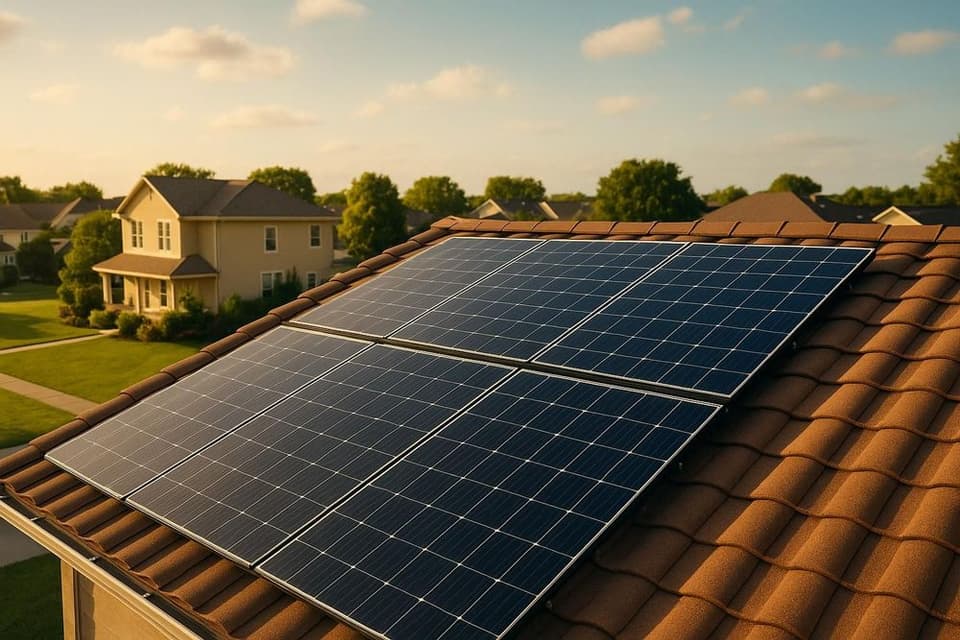
Solar panel leasing portfolios offer steady income and accessibility but come with risks investors must manage. Here’s what you need to know:
- Key Risks:
- Sponsor/Servicer Risk: Financial health of companies managing solar assets.
- Counterparty Risk: Reliability of involved parties.
- Technology Risk: Aging equipment or declining performance.
- Credit Risk: Lease holders’ ability to pay.
- Transfer Risk: Issues during property sales.
- Grid Electricity Price Risk: Changes affecting solar cost-effectiveness.
- Portfolio Features:
- 20-year average lease term with a 2.9% annual payment increase.
- 95% energy output guarantee reduces losses.
- Maintenance reserves ($0.05–$0.15 per Watt) mitigate operational risks.
- Performance Data:
- Solar leases have a 1.8% default rate, lower than residential solar loans (4.2%).
- Delinquency rates: 3.1% (under 30 days late), 0.7% (over 90 days late).
- Market Insights:
- Sunbelt states yield higher returns (+12% IRR) but face more hail claims (+15%).
- Northeast regions benefit from 92% SREC eligibility but offer lower returns (-8%).
- Tools for Risk Management:
- FICO Solar Score: Evaluates payment behavior.
- PV Yield: Tracks energy production.
- LeaseHealth Dashboard: Provides real-time portfolio analytics.
Quick Comparison: Leasing vs. Direct Loans
| Aspect | Solar Leasing | Direct Loans |
|---|---|---|
| Initial Investment | Minimal upfront costs | High initial capital |
| Maintenance | Covered by lease | Owner responsibility |
| Contract Duration | 15–20 years | 30–35 years (system lifespan) |
| Tax Benefits | For lessor/investors | For property owners |
| Monthly Payments | May increase (escalator) | Fixed loan payments |
| Property Transfer | Can be complex | Simpler transfer |
| Long-term Returns | Lower potential savings | Higher potential returns |
Bottom Line: Solar leasing provides predictable income with lower risks but less long-term savings compared to direct ownership. Investors should focus on sponsor reliability, maintenance practices, and market conditions to balance risks and rewards effectively.
Renewable Energy Project Finance Basics with Josh Pearson ...
1. Solar Lease Portfolio Structure
Solar lease portfolios consist of three main components. These leases typically last 15–25 years and include a 2.9% annual payment increase. Contracts often guarantee 95% of the system's projected energy output and outline clear terms for the lease's conclusion.
According to recent NREL data, solar lease portfolios show a default rate of 1.8%, which is significantly lower than the 4.2% default rate for residential solar loans (2023). Delinquency rates sit at 3.1% for payments under 30 days late and 0.7% for those over 90 days late.
| Portfolio Component | Industry Standard | Risk Impact |
|---|---|---|
| Lease Term | 20 years | Ensures stable, long-term revenue |
| Payment Escalator | 2.9% annually | Predictable cash flow growth |
| Performance Guarantee | 95% production | Reduces potential losses |
Maintenance responsibilities are another critical aspect. Most portfolios (85%) rely on full-service contracts, which include maintenance reserves of $0.05 per Watt annually. This approach helps manage operational risks over the long term, a practice endorsed by industry professionals.
"Always audit at least 15% of system installations physically", recommends Jane Doe, Solar Asset Manager at JPMorgan Chase [Renewable Energy World, April 2025].
Geography plays a significant role in shaping portfolio risks. The DOE Solar Market Diversification Index 2024 highlights that Sunbelt states provide 12% higher internal rates of return (IRR) but face 15% more hail damage claims. In contrast, the Northeast offers 8% lower returns but benefits from 92% SREC (Solar Renewable Energy Certificate) eligibility.
Advanced tools are now used to monitor and assess portfolio risks:
- FICO Solar Score: Evaluates payment behavior, using a 300–850 scale.
- PV Yield: Tracks solar production with a 99.9% API uptime.
- LeaseHealth Dashboard: Offers real-time analytics for portfolio management.
Strong transfer mechanisms also contribute to portfolio stability. These include an 89% success rate for lease assumptions, mandatory title protection in 38 states, and standardized estoppel certificates.
To address technology aging, portfolios often include degradation buffers that add an extra 0.25% annual capacity. Additionally, third-party maintenance escrows hold reserves of $0.15 per Watt to cover potential long-term maintenance needs.
2. Alternative Solar Finance Options
Alternative financing methods like direct loans and Power Purchase Agreements (PPAs) come with their own sets of pros and cons compared to solar leases.
PPAs involve little to no upfront costs and provide consistent energy pricing. However, long-term contracts can include rate increases over time, potentially cutting into savings. Two main risks for PPA portfolios are grid price risk, where changes in utility rates can affect savings, and the complex nature of tax equity funding structures.
Direct loans, on the other hand, allow for full system ownership and often come with shorter repayment terms. But ownership also means taking on all maintenance and repair responsibilities, which requires careful budgeting. Credit risk for direct loans is tied closely to the quality of the initial underwriting process, as there is typically less ongoing oversight compared to leases or PPAs.
Understanding these differences can help you evaluate which option aligns best with your financial and operational goals.
Key Benefits and Drawbacks
Expanding on the risk profiles discussed earlier, here’s a breakdown of the advantages and challenges for solar leasing and direct purchase/loan portfolios.
The table below compares key aspects:
| Aspect | Solar Leasing Portfolios | Direct Purchase/Loan Portfolios |
|---|---|---|
| Initial Investment | No or minimal upfront costs | High initial capital requirements |
| Maintenance Responsibility | Covered by the lease agreement | Handled by the property owner |
| Contract Duration | 15–20 years | 30–35 years (system lifespan) |
| Tax Benefits | Limited to lessor/investors | Available to property owners |
| Monthly Payments | May increase with escalator clauses | Fixed loan payments |
| Property Transfer | Can be complex | Typically transfers with property |
| Long-term Returns | Lower potential savings | Higher potential returns |
Market data shows that over 40% of consumers in developed markets opt for third-party leasing. This notable share underscores strong interest in leasing, influenced by several factors:
Portfolio Strengths
- Steady Income: Leasing provides predictable revenue through contracted monthly payments.
- Reduced Risks: Maintenance is included, lowering operational burdens.
- Flexibility: Shorter terms (15–20 years) allow for portfolio adjustments.
- Accessibility: Minimal upfront costs make it appealing to a broader audience.
Risk Factors
- Rising Costs: Escalator clauses can increase monthly payments over time.
- Property Sales: Transferring the lease during a home sale can be complicated.
- Service Quality: Variations in service can impact customer satisfaction.
These points help investors tailor their strategies to balance risks and rewards effectively.
Conclusion
Analyzing solar panel leasing portfolios highlights critical investment risks. To navigate these challenges effectively, it's essential to address issues ranging from sponsor or servicer reliability to the complexities of tax equity funding. This approach lays the groundwork for reducing risks and improving portfolio management.
Key Priorities for Investors
Risk Management
- Implement standardized credit protections and lifecycle management practices.
- Ensure seamless collaboration with partners from installation to ongoing maintenance.
- Secure decommissioning bonds to safeguard against end-of-term liabilities.
Financial Focus
- Use escalation clauses to guard against inflation.
- Keep an eye on grid electricity prices to stay competitive.
Commercial applications of these strategies can also boost net operating income (NOI). As Mark Schottinger, President and Chief Legal Officer of Solar Landscape, explains:
"Renting rooftop space for solar installations is a straightforward way to increase net operating income (NOI)".
Steps for Success
To address these risks and challenges, investors should emphasize:
- Thoroughly evaluating developer track records.
- Conducting legal reviews of lease agreements.
- Actively monitoring portfolio performance.
- Positioning strategically within the market.
These actions not only tackle the identified risks but also align with the broader challenges in managing solar leasing portfolios.
FAQs
What should investors look for when assessing the reliability of sponsors or servicers in solar panel leasing portfolios?
When assessing the reliability of sponsors or servicers in solar panel leasing portfolios, investors should focus on several key factors:
- Track Record: Evaluate the sponsor or servicer's history in managing solar leasing portfolios. Consistent performance and experience in the sector can indicate reliability.
- Financial Stability: A financially sound sponsor or servicer is better positioned to handle long-term obligations like maintenance and technology upgrades.
- Operational Expertise: Ensure they have the necessary expertise to manage leasing agreements, address property transfer challenges, and keep up with technological advancements.
These elements are critical in minimizing risks and ensuring a stable return on investment over the portfolio's lifecycle.
How do fluctuations in electricity prices affect the profitability of solar panel leasing investments?
Fluctuations in electricity prices can have a significant impact on the profitability of solar panel leasing investments. When grid electricity prices rise, leasing solar panels becomes more financially attractive, as it allows businesses and homeowners to lock in stable, predictable energy costs over the long term. This can help reduce reliance on volatile utility rates.
For example, in states like California, where energy costs have been steadily increasing due to rising demand and infrastructure investments, solar leasing offers a practical way to offset these expenses. By leasing solar panels, investors and consumers can hedge against future price hikes, making it a cost-effective and sustainable energy solution.
What are the benefits and challenges of leasing solar panels compared to buying them outright or with a loan?
Leasing solar panels can be an attractive option for homeowners looking to avoid upfront costs, as the leasing company typically covers installation and maintenance. This arrangement makes solar energy more accessible without requiring significant initial investment.
However, leasing often comes with potential drawbacks. Monthly lease payments can reduce overall savings, and homeowners may miss out on federal tax credits or rebates available to those who purchase their systems. Additionally, some leases include escalator clauses, which increase payments over time.
In contrast, buying solar panels outright or through a loan provides greater long-term financial benefits. Homeowners can take advantage of tax incentives, rebates, and full ownership of the system, which allows for more control and eliminates recurring lease payments.
Related posts
- Analysis of Solar Panel Loan Portfolio Quality: Risk Assessment Methodology
- Structuring Deals for Acquiring Solar Panel Loan Portfolios
- Segmentation of Debt Obligations Market in Solar Energy: Commercial vs. Residential Sector
- Payment Behavior of Clients in the Solar Panel Loan Segment: Analysis for Investors
