

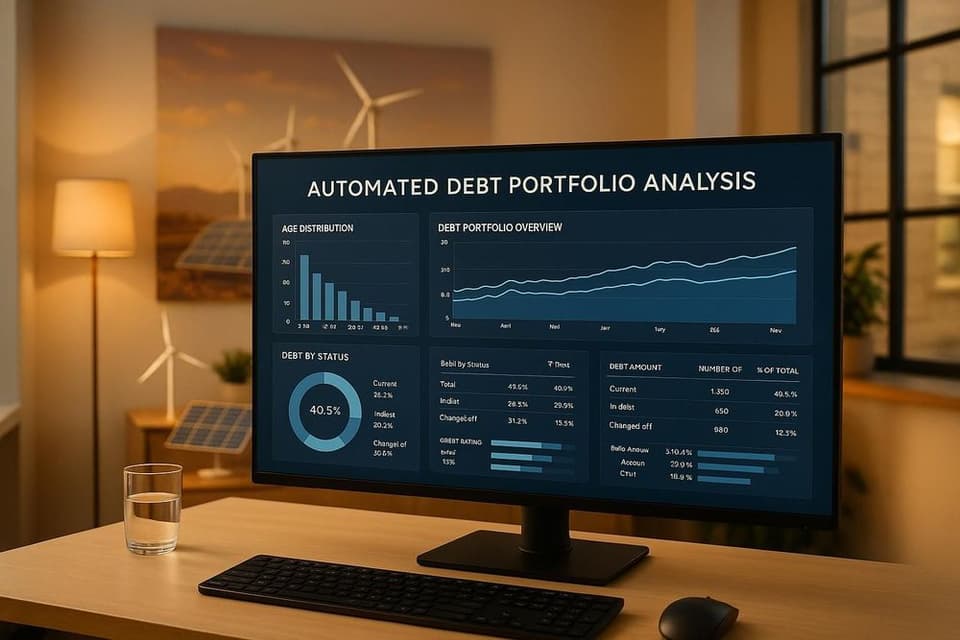
Automated systems are transforming how debt portfolios in the energy sector are evaluated. These platforms integrate real-time data, advanced analytics, and compliance tools to streamline decision-making and improve risk assessment. Here's what you need to know:
- Key Features:
- Real-time portfolio tracking and analysis.
- Risk assessment using predictive algorithms.
- Compliance automation for regulatory adherence.
- Integration of energy production, financial, and market data.
- Platforms Compared:
- Debexpert: Focuses on solar energy portfolios with tools for risk modeling, valuation, and compliance.
- Market Solutions: Broader focus, integrating AI-driven analytics for diverse energy investments.
- Quick Comparison:
| Feature | Debexpert | Market Solutions |
|---|---|---|
| Data Integration | Solar-specific metrics | Multi-energy datasets |
| Risk Assessment | Predictive models | Stress testing and forecasting |
| Compliance Tools | Comprehensive suite | Streamlined document management |
| Scalability | Small to large portfolios | Flexible for all scales |
Takeaway: Automated systems like Debexpert and other market solutions simplify portfolio management by integrating data, improving forecasting accuracy, and ensuring compliance. For effective implementation, choose a platform that aligns with your portfolio's size, energy focus, and regulatory needs.
How to enhance debt collection strategies with AI in banks and fintechs
1. Debexpert Platform Features
Debexpert
Debexpert provides a powerful set of tools for evaluating solar debt portfolios. These features are designed to streamline the automated assessment process, highlighting the role of advanced digital solutions in the energy sector.
Data Integration Framework
The platform connects seamlessly with energy monitoring systems to enable real-time tracking. It collects and analyzes key metrics, such as:
| Metric Type | Data Points |
|---|---|
| Energy Output | kWh production, peak generation times |
| Financials | Payment history, default rates |
| Weather Impact | Solar irradiance, weather patterns |
| System Health | Equipment status, maintenance alerts |
With this integrated data, Debexpert leverages advanced analytics to deliver actionable insights that help users make informed decisions.
Advanced Portfolio Analysis
Debexpert takes portfolio evaluation to the next level with its suite of analytical tools, including:
- Risk Assessment Engine: Combines historical data with predictive models to evaluate portfolio health and identify potential risks.
- Valuation Models: Estimates portfolio values by factoring in production forecasts and current market trends.
- Performance Tracking: Offers customizable dashboards that monitor critical metrics, ensuring users can track performance effectively.
Compliance Management Suite
To support regulatory adherence, the platform includes a comprehensive compliance management suite. Key features include:
| Feature | Function | Benefit |
|---|---|---|
| Regulatory Updates | Real-time monitoring | Keeps portfolios aligned with current energy regulations. |
| Document Management | Automated filing | Ensures all required documentation is organized and accessible. |
| Audit Trail | Detailed history tracking | Provides a transparent record of portfolio actions. |
Portfolio Size Handling
Whether managing a single installation or a large-scale utility project, Debexpert is built to handle portfolios of all sizes. It supports:
- Real-time data integration across multiple locations.
- Complex, multi-layered portfolio structures.
- Various debt types and payment terms.
The platform’s reporting engine transforms data into visually engaging insights, using tools like heat maps, trend analysis charts, and risk exposure matrices. These visualizations simplify complex data, helping users make well-informed decisions.
With a secure, cloud-based infrastructure, Debexpert ensures the protection of sensitive financial data while offering the scalability needed to accommodate portfolio growth.
2. Market Solutions Overview
The field of automated debt portfolio evaluation in the energy sector is making strides, especially when it comes to managing the complexities of solar investments. Today's platforms are designed to keep up with the ever-evolving world of renewable energy financing.
Integration Capabilities
Modern platforms bring together a variety of data sources to deliver more precise portfolio assessments. These include:
- Energy production data
- Financial performance metrics
- Weather pattern insights
- Market pricing trends
By combining these datasets, platforms unlock advanced analytics that strengthen risk detection and streamline portfolio management.
Analytics and Risk Assessment
With integrated data at their core, these platforms leverage sophisticated analytics to deliver thorough evaluations. Here's how key components contribute:
| Analysis Component | Functionality | Business Impact |
|---|---|---|
| Risk Modeling | Predicts potential risks | Enables early risk detection |
| Cash Flow Analysis | Evaluates portfolios | Enhances valuation accuracy |
| Performance Tracking | Monitors continuously | Supports proactive management |
| Stress Testing | Simulates scenarios | Aids in risk mitigation |
Regulatory Compliance Features
Navigating the intricate regulatory environment of the U.S. energy sector is no small feat. Modern systems simplify this challenge by automating regulatory updates and offering streamlined document management, ensuring operations remain compliant regardless of scale.
Portfolio Scale Management
Whether you're managing a small operation or a large utility-scale portfolio, these platforms adapt to meet your needs. Their flexibility ensures they perform effectively for portfolios of any size.
Technology Integration
The integration of advanced technologies, particularly AI-driven analytics, takes evaluation accuracy to the next level. These tools enhance risk prediction and valuation processes while ensuring the system remains secure and reliable.
"In August 2023, a multinational renewable energy firm used Moody's Early Warning System to identify and mitigate counterparty credit risk, preventing potential losses by acting on early signs of credit deterioration"
System Comparison Results
A thorough analysis highlights performance differences across key operational areas. Building on the detailed platform features and market insights, the following comparison quantifies these differences and their potential impact.
Processing Efficiency and Data Integration
Performance metrics reveal how advanced systems leverage integrated analytics to improve forecasting accuracy. Regional data showcases variations in error metrics, emphasizing the benefits of integrated approaches:
| Region | Deep Learning MAPE | Integrated AI-PT MAPE | Improvement |
|---|---|---|---|
| Spain | 6.89% | 5.36% | 22.2% |
| Brazil | 6.08% | 4.52% | 25.7% |
These figures underline how integrated systems can refine predictive accuracy, offering tangible benefits in specific markets.
Core System Capabilities
Key features of modern systems contribute to operational improvements across various areas:
| Feature Category | Capabilities | Business Impact |
|---|---|---|
| Data Management | Single repository for front-to-back processes | Streamlined operations |
| Environmental Tracking | Energy certificates and emissions monitoring | Better regulatory compliance |
| Portfolio Analysis | Multi-asset valuation support | Enhanced risk management |
| Automation | Settlement processing and regulatory reporting | Reduced manual workload |
These capabilities collectively reduce inefficiencies, improve compliance, and enhance decision-making processes.
Scalability and Performance Metrics
Modern automated systems adapt seamlessly to portfolio size, with cloud-based pricing models that scale according to volume. Implementation costs vary based on factors like licensing, integration, maintenance, and training, making scalability a critical consideration for businesses.
Real-World Implementation Impact
Hitachi Energy’s ETRM solutions serve as a strong example of how advanced systems can transform portfolio management. Their platform centralizes control while allowing decentralized execution, striking a balance between oversight and flexibility. This comprehensive approach has proven effective in energy trading and generation.
These findings emphasize the importance of selecting platforms that align with portfolio needs while offering robust analytics. With the right system, organizations can achieve measurable improvements in forecasting accuracy and operational efficiency.
Summary and Recommendations
After thoroughly analyzing automated debt portfolio evaluation systems in the energy sector, several key takeaways and actionable recommendations stand out for organizations aiming to improve their portfolio management processes.
Technical Implementation Guidelines
Choose systems that consistently improve forecasting reliability. Research shows that AI-PT systems, when integrated effectively, can significantly boost forecasting precision.
Key System Capabilities
To achieve these performance benefits, focus on systems that offer the following features:
| Capability | Impact | Implementation Consideration |
|---|---|---|
| Solar-specific forecasting | Improves prediction accuracy | Moderate complexity to set up |
| Weather impact analysis | Enhances risk assessment | Requires integration with existing systems |
| Battery storage modeling | Analyzes revenue stability | Needs additional data inputs |
| Variable pricing management | Models $16–35/MWh pricing range | Requires market-specific adjustments |
Preparing for the Future
To ensure long-term success, organizations need to adopt strategies that address both current needs and future challenges:
- Real-time Data Integration: Enable the processing of live production data alongside financial metrics for a more dynamic analysis.
- Advanced Risk Assessment: Implement stress testing tools to simulate various market conditions and weather scenarios, offering a deeper understanding of potential risks.
- Regulatory Compliance: Opt for platforms designed to meet today’s standards while remaining flexible enough to adapt to future regulatory changes.
FAQs
How do automated tools improve risk assessment for energy sector debt portfolios?
Automated tools are transforming how risk assessment is handled in energy sector debt portfolios by directly integrating with energy production data. This connection makes it possible to evaluate portfolio performance with greater precision, shedding light on risks linked to variations in energy output.
These systems also take data analysis to the next level by reducing human error, speeding up the assessment process, and delivering insights based on hard data. The result? Faster, more dependable decisions that align with the specific demands of energy sector investments.
How does Debexpert stand out in terms of data integration and scalability for evaluating solar debt portfolios?
Debexpert provides tools tailored to work effortlessly with energy production data, delivering precise and efficient analysis of solar debt portfolios. Its platform is designed to manage extensive portfolios, offering flexible solutions that keep up with increasing data requirements while maintaining top-notch performance.
With a strong emphasis on automation and dependability, Debexpert streamlines the evaluation process without sacrificing accuracy. This makes it a great option for energy sector professionals aiming to simplify and enhance their portfolio assessments.
How can companies ensure compliance with regulations when using automated tools to evaluate debt portfolios in the energy sector?
To stay compliant with regulations when using automated systems for evaluating debt portfolios, businesses should prioritize a few essential practices.
First, make sure the platform meets all relevant industry standards and legal requirements, including those specific to the energy sector and data privacy laws. Conducting regular audits and keeping the system updated ensures it stays aligned with any changes in regulations.
It’s also important to implement strong data validation processes. This helps maintain accuracy and ensures transparency in portfolio evaluations. Providing employees with proper training on how to use the system and understand its compliance features can further minimize potential risks. Lastly, consulting with legal or regulatory experts is a smart move to confirm the system adheres to both federal and state-level requirements within the energy sector.
Related Blog Posts
- Analysis of Solar Panel Loan Portfolio Quality: Risk Assessment Methodology
- Acquisition Strategies for Debt Accounts in the Solar Energy Sector
- Portfolio Diversification Strategies: Combining Different Types of Debts in the Energy Sector
- Forecasting Models of Debt Portfolio Profitability in the Solar Energy Sector
